|
|
Religion in Taiwán | |
 |
Taiwan is a country of various religious beliefs. There are currently thirteen registered religions on the island practiced by nearly half the residents of Taiwan. These religions include Buddhism (the most popular), Taoism, Catholicism, Protestantism, Hsuan-yuan Chiao, Islam, Li-ism, Tenrikyo, Baha'i, T'ienti Teachings, Tien Te Chiao, I-Kuan Tao, and Mahikarikyo.
Buddhism
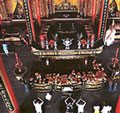 Buddhism is the most prevalent institutionalized religion in Taiwan, and is practiced by almost 4.9 million individuals. Originating from India, Buddhism was introduced to Taiwan in the late 16th Century. The more significant type of Buddhism today is the Mahayana (Great Wheel). Devotees of this religion chant mantras and sutras, and practice meditation in the many temples available on the island.
Taoism
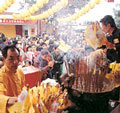 Taoism is the second most popular religion in Taiwan, followed by 4.5 million people of Taiwan. This religion evolved from the philosophy of Lao Tzu, who lived during the 6th Century BC. The central idea of the religion is the fulfillment of divinity. Taoists use incense for prayer and worships.
Catholicism
Roughly 304,000 individuals are believers of Catholicism. Christianity came to Taiwan in 1626 through the Spanish occupation. A Catholic priest, Father Martinez, together with four Dominican priests from the Philippines started this mission to introduce the Catholic faith to the people.
Protestantism
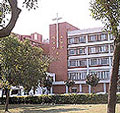 Georgius Candidus of the Reformed Church of Holland was the first successful missionary to introduce Protestantism to this island. In 1997, there were at least 65 Protestant sects, 2,700 Protestant churches, and 2,550 ministers in Taiwan.
Tung Shan She
T'ung-shan She (同善社, pinyin: Tóngshàn Shè, literally Society of Goodness)

Is a religious group that is one of the Way of Former Heaven (Hsien-t'ien Tao) sects. The Way of Former Heaven sects are syncretic religious groups that aspire to unify Taoism, Confucianism, Buddhism and other religions.
T'ung-shan She was founded in 1912 by P'eng Hui-lung (1873-?) from Szechwan , who stands in the seventeenth patriarchal generation of this Hsien-t'ien Tao (Way of Former Heaven) branch line. For the first few years the sect remained centered in the province of Szechwan , but in 1917 the sect's administrative headquarters was established in Beijing China 1920 a second, a second centre, the "Unity Association" (He-i Hui) was established in Hankow, which was to relieve the Beijing Taiwan , Hong Kong and Southeast Asia .
T'ung-Shan She is officially banned in the People's Republic of China
After the loss of its mainland core organization, there currently appears to be no central governing body that would embrace all surviving T'ung-shan She Buddha halls. However, the situation is far from clear, as no extended study has been made of the T'ung-shan She's present state of affairs. There do seem to exist regional hierarchies in which one Buddha hall, often the oldest, claims seniority over the others, and acts as a sort of primus inter pares. For example, the first Taiwanese Buddha hall was founded in 1947 and in 1949 established the "Chinese Confucian Studies Association" (Chung-kuo K'ung-hsueh Hui). This earliest Buddha Hall is designated as the "provincial society" (sheng-she), while its later offshoots in other parts of Taiwan Singapore , there exists a "Southeast Asian General Association of the Sagely Religion" (Nan-yang Sheng-chiao Tsung-hui), which seems to head the T'ung-shan She Buddha Halls in Singapore and Malaysia
Yán Shèng Dao
Yang Shen Dao is a sub - branch of the Tung Shan She, createdaround 1976 as they do not define themselves as religious orphilosophical, but as a practice.They teach that there is one Creator of all that exists and this Creator is One Truth therefore is one that comes from the Creator and is taught by the five great enlightened masters mainly: Christ, Buddha, Lao Tzu, Confucius and Mohammed, but willingly acceptthe teachings of many other enlightened in the history of mankind.
In this one truth are called "The Word" or "The Sacred Word."
Another peculiarity is that they like Christianity, expect and acceptChrist as the next Buddha to come and that is a manifestation ofGod in this energy level.
When the split occurs sectional T'ung Shan She's branch in thetrans-course of the '70s, LI Yangzhi having already risen to the "degree" of Dien Shi Chuan along with other spiritual teachersfound a new sub branch independent in 1976, according to "divine revelations" received Dien Shi Chuan LI, in those years, which they called Yan Sheng Dao, Dao Dao or the Holy Word of Truth as it is also known in Taiwan , named for the Gospel of St. Luke 8:21 says:"and he answered and said unto them, My mother and my brothers are those who hear the Word of God, and do it." and also: Luke 11: 28 but he said, "Blessed rather are those who hear the Word ofGod and keep it."
Hsuan-yuan Chiao
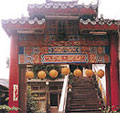 Hsuan-yuan Chiao was established by an old legislator named Wang Han-sheng in 1957 in Taiwan. 'Hsuan-yuan' is the name of Huangti, the Yellow Emperor who unified China, while 'Chiao' means teachings or religion in Chinese. This religion was conceived because of Wang's anguish over the dispossession of the Chinese mainland to the Chinese communists.
Each lunar year, a large-scale ceremony is held to honor Huangti on the ninth of the first month. Other smaller ceremonies are held on specific days of other months to celebrate Huangti's birthday and his ascent to heaven. The largest Hsuan-yuan temple is situated in Tamsui.
Islam
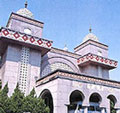 Islam was introduced to China during the reign of Tai Tsung (627-649 AD). A massive migration of Muslims into China brought about the augmentation of Muslim arts and sciences, medicine, astronomy, mathematics, and military science. In 1949, 20,000 Muslims accompanied by the Republic of China (ROC) government came to Taiwan, and Islam was thus established as a religion.
Muslims in Taiwan today, however, have difficulties conforming to orthodox Islamic customs. The hectic city lifestyles and the restraints of a non-Muslim environment contribute to the many problems faced by the Muslims. There are currently three new mosques, which have been constructed in Kaohsiung, Taichung, and Lungkang, together with two other mosques in Taipei.
Li-ism
Li-ism was founded by Yang Lai-ju in the 17th Century. The meaning of Li-ism is 'the doctrine of order'. Li-ism accentuates traditional Chinese morals and ethics. It is an amalgamation of Confucianism, Buddhism, and Taoism while accentuating also on the worshipping of Kuanyin (Goddess of Mercy). Customs and practices of Li-ism are similar to that of Buddhism in terms of worship and 'dos and don'ts'.
Tenrikyo
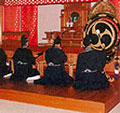 Tenrikyo, as the name suggests, is a Japanese religion founded in 1838 by Miki Nakayam, who was a daughter of a peasant family. It teaches people how to abide by God's will by gaining control of their destiny so they can lead a life of joy. This religion was introduced in Taiwan during the Japanese occupation. Due to its similarity to Buddhism, it was accepted and developed in Taiwan. The Tenrikyo headquarters is located in the Yuanshuan area of Taipei.
Baha'i
The Baha'i faith was founded in Iran in 1844 by 'Bab'. Baha'is have few beliefs. They believe that the family is the foundation of human society, and God has sent messengers like Moses, Krishna, Buddha, Jesus, and Mohammed to fulfill his purpose. In 1954, an Iranian missionary couple came and constituted Taiwan's first Baha'i center in Tainan. Now, the local headquarters is located in Taipei.
Tienti Teachings
Tienti teachings were founded by Lee Yu-Chieh in the mid-1980s. Tienti teachings focuses on some of China's oldest religious traditions and honors the Lord of Heaven (T'ienti), ruler of the universe. The religion stresses the co-existence between the spiritual and material worlds. However, the absolute goal of Tienti teachings is a world of universal love regardless of race or belief.
Tien Te Chiao
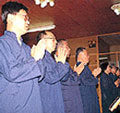 Tien Te Chiao is a combination of Confucianism, Taoism, Buddhism, Christianity, and Islam. The religion was brought into existence in mainland China in 1923. Its founder, Hsiao Chang-Ming was gifted with the gift of healing, which attracted much attention. He inducted many principles in which followers were to adhere throughout their lives. Wang Ti-ching, a disciple of Hsiao in Kaohsiung, spread Tien Te Chiao.
I-Kuan Tao
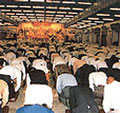 I-Kuan Tao is a new faith and also the third most popular religion in Taiwan. It strives to distinguish common principles underlying Taoism, Buddhism, Christianity, Islam, Judaism, and Hinduism. Worshippers believe that by unveiling the universal truths, the world can achieve peace and harmony.
Mahikarikyo
Mahikarikyo, another Japanese religion, was founded by Yosikazu Okada in 1959. Mahikarikyo believes that anyone can attain healing powers by taking a three-day seminar on the Spiritual Art of Divine Light. Devotees believe that their teachings of the righteous law will bring all people happiness in the coming Holy Twenty-First Century. Mahikarikyo was introduced to Taiwan in 1983, but was only registered with the Ministry in 1996. Now, the religion has vastly developed with shrines available around the island.
Religiones del Mundo
|
|
Religiones en Taiwán
|
Taiwán es un país de diversas creencias religiosas. En este momento hay trece religiones registradas en la isla practicada por casi la mitad de los habitantes de Taiwán. Estas religiones son el budismo (el más popular), el taoísmo, catolicismo, protestantismo, Tongshan She, Yán Shèng Dao, Chiao Hsuan-yuan, el Islam, Li-ismo, Tenrikyo, Baha'i, Enseñanzas T'ienti, Tien Te Chiao, I-Kuan Tao, y Mahikarikyo.
Budismo
El budismo es la religión institucionalizada
más frecuente en Taiwán, y es practicado por casi 4,9 millones personas. Originario de la India , el budismo fue introducido en Taiwan en el
siglo 16. El tipo más
importante de hoy es el budismo Mahayana (Gran Rueda). Los devotos de esta religión cantan mantras y sutras
y practicar la meditación en los templos muchos disponibles en la isla.
El taoísmo
El Taoísmo es la segunda religión más
popular en Taiwan, seguido por 4,5 millones de habitantes de Taiwán. Esta religión evolucionó a partir de la filosofía de
Lao Tse, que vivió durante el siglo 6 aC . La idea central
de la religión es el cumplimiento de la divinidad. Los taoístas utilizan el incienso de la oración y
adoración.
Catolicismo
Alrededor de
304.000 personas son creyentes de la religión católica. El cristianismo llegó a Taiwan en 1626 a través de la
ocupación española. Un sacerdote
católico, el padre Martínez, junto con cuatro sacerdotes dominicos de Filipinas
comenzó esta misión de presentar la fe católica a la gente.
Protestantismo
Cándido Georgius de la Iglesia Reformada
de Holanda fue el primer misionero éxito de introducir el protestantismo a esta
isla. En 1997, hubo al menos 65 sectas
protestantes, 2.700 iglesias protestantes, y 2.550 ministros de Taiwán.
Tung Shan She
Tung-shan She (同 善 社, pinyin: Tongshan She, literalmente,la Sociedad de la Bondad )
Es un grupo religioso que es uno de el Camino del Cielo Anterior (Hsien-t'ien Tao) sectas. El Camino de las sectas primer cielo son sincréticas grupos religiosos que aspiran a unificar el taoísmo, el confucianismo, el budismo y otras religiones.
Tung-shan She fue fundada en 1912 por P'eng Hui-pulmonar (1873 -?) De Sichuan, que está en la generación de esta decimoséptima patriarcal Tao Hsien-tien (Camino del Cielo ex) ramal. Para los primeros años de la secta se mantuvo centrado en la provincia de Sichuan, pero en 1917 la sede administrativa de la secta se estableció en Beijing y quedó debidamente registrado ante el gobierno de la ciudad. La secta forjado estrechos vínculos con la elite tradicional, y las sociedades filiales multiplicado rápidamente por toda China. En 1920, un segundo, un segundo centro, la "Unidad Sindical" (He-i Hui) se estableció en Hankow, que era para aliviar la sede de Beijing de algunas de sus responsabilidades. El T'ung-shan She es estrecha alianza con los círculos reaccionarios políticos provocaron que ser visto con algo de desagrado por el nuevo gobierno republicano. Poco después de la asunción de éste del poder, el Le Tung-shan fue proscrito (1927). Esta prohibición se aplica sólo de manera irregular no dio lugar a la desaparición inmediata de la secta, pero sí poner fin a su etapa anterior de rápida expansión. Se suprime eficazmente sólo después de la subida al poder comunista en 1949. Hoy en día un pequeño número de Tung-shan She "Buda Halls" (FO-t'ang) se mantienen en funcionamiento en Taiwán, Hong Kong y el sudeste asiático.
Tung-Shan She está oficialmente prohibida enla República Popular
de China desde el reinado de los comunistas y muchos de sus miembros han sido
perseguidos severamente.
Después de la pérdida de su organización central continental, en la actualidad parece que no hay órgano de gobierno central que abarque todos los sobrevivientes T'ung-shan She Buda salas. Sin embargo, la situación dista mucho de ser clara, ya que ningún estudio de extensión se ha hecho dela T'ung -shan She es actual
estado de cosas. No parecen existir jerarquías regionales en las que una
sala de Buda, a menudo las más antiguas, las reivindicaciones de antigüedad
sobre los otros, y actúa como una especie de primus inter pares. Por ejemplo, el primer Buda sala de Taiwán fue fundada
en 1947 y en 1949 estableció el "chino Confucio Asociación de
Estudios" (Chung-kuo Kung-Hsueh Hui).Esta
primera Sala del Buda ha sido designada como la "sociedad
provinciana" (sheng-She), mientras que sus ramificaciones posteriores en
otras partes de Taiwan se llaman "sociedades filiales" (fen-She). La imagen, sin embargo, se complica por un cisma que se
produjo en la sección taiwanés de la secta en 1978, dando lugar a la creación
de una organización de la competencia denominada "Asociación para el
Cultivo Nacional" (Kuo-min Hsieh Shen-Hsiu-hui). En Singapur, existe un "del sudeste asiático
Asociación General de la religión sabiamente" (Nan-yang Sheng-Chiao
Tsung-hui), que parece encabezar la
T'ung -shan She Buda Salas en Singapur y Malasia, todos los
cuales anuncian a sí mismos bajo el nombre de "La religión
sabiamente" (Sheng-chiao).Una
vez más, sin embargo, el panorama de la situación actual dista mucho de ser
clara.
Yán Shèng Dao
Yang Shen dao es una sub - rama de la Tung Shan She, creada alrededor del año 1976 ellos no se autodefinen como religión ni como corriente filosófica, sino como una práctica.
Enseñan que hay un sólo Creador de todo lo que existe y este Creador es Uno por lo tanto la Verdad es una sola que proviene de este Creador y es enseñada por los cinco grandes maestros iluminados principalmente: Cristo, Buda, Laozi, Confucio y Mahoma, aunque aceptan de buen grado las enseñanzas de muchos otros iluminados en la historia de la humanidad.
A esta Verdad Ünica les llaman "La Palabra" o "La Palabra Sagrada".
Otra particularidad es que ellos al igual que el Cristianismo, esperan y aceptan a Cristo como el próximo Buda a venir y que es la emanación de Dios en este plano energético.
Cuando se produce la división seccional de la rama T’ung Shan She, en el trans-curso de los años ´70; LI Yángzhi habiendo ya ascendido a el “grado” de Dien Chuán Shi junto con otros maestros espirituales fundan una nueva sub rama independiente, en el año 1976, de acuerdo a “revelaciones divinas” que recibe Dien Chuán Shi LI, en esos años; a la que denominaron Yán Shèng Dao, Dao de la Palabra Sagrada o Dao de la Verdad como también se la conoce en Taiwán; llamada así por el Evangelio de San Lucas en 8:21 dice: “El entonces respondiendo, les dijo: Mi madre y mis hermanos son los que oyen La Palabra de Dios, y la hacen.” y también: San Lucas 11: 28 Pero él dijo: «Dichosos más bien los que oyen la Palabra de Dios y la guardan.»
Tung Shan She
Tung-shan She (同 善 社, pinyin: Tongshan She, literalmente,
Es un grupo religioso que es uno de el Camino del Cielo Anterior (Hsien-t'ien Tao) sectas. El Camino de las sectas primer cielo son sincréticas grupos religiosos que aspiran a unificar el taoísmo, el confucianismo, el budismo y otras religiones.
Tung-shan She fue fundada en 1912 por P'eng Hui-pulmonar (1873 -?) De Sichuan, que está en la generación de esta decimoséptima patriarcal Tao Hsien-tien (Camino del Cielo ex) ramal. Para los primeros años de la secta se mantuvo centrado en la provincia de Sichuan, pero en 1917 la sede administrativa de la secta se estableció en Beijing y quedó debidamente registrado ante el gobierno de la ciudad. La secta forjado estrechos vínculos con la elite tradicional, y las sociedades filiales multiplicado rápidamente por toda China. En 1920, un segundo, un segundo centro, la "Unidad Sindical" (He-i Hui) se estableció en Hankow, que era para aliviar la sede de Beijing de algunas de sus responsabilidades. El T'ung-shan She es estrecha alianza con los círculos reaccionarios políticos provocaron que ser visto con algo de desagrado por el nuevo gobierno republicano. Poco después de la asunción de éste del poder, el Le Tung-shan fue proscrito (1927). Esta prohibición se aplica sólo de manera irregular no dio lugar a la desaparición inmediata de la secta, pero sí poner fin a su etapa anterior de rápida expansión. Se suprime eficazmente sólo después de la subida al poder comunista en 1949. Hoy en día un pequeño número de Tung-shan She "Buda Halls" (FO-t'ang) se mantienen en funcionamiento en Taiwán, Hong Kong y el sudeste asiático.
Tung-Shan She está oficialmente prohibida en
Después de la pérdida de su organización central continental, en la actualidad parece que no hay órgano de gobierno central que abarque todos los sobrevivientes T'ung-shan She Buda salas. Sin embargo, la situación dista mucho de ser clara, ya que ningún estudio de extensión se ha hecho de
Yán Shèng Dao
Yang Shen dao es una sub - rama de la Tung Shan She, creada alrededor del año 1976 ellos no se autodefinen como religión ni como corriente filosófica, sino como una práctica.
Enseñan que hay un sólo Creador de todo lo que existe y este Creador es Uno por lo tanto la Verdad es una sola que proviene de este Creador y es enseñada por los cinco grandes maestros iluminados principalmente: Cristo, Buda, Laozi, Confucio y Mahoma, aunque aceptan de buen grado las enseñanzas de muchos otros iluminados en la historia de la humanidad.
A esta Verdad Ünica les llaman "La Palabra" o "La Palabra Sagrada".
Otra particularidad es que ellos al igual que el Cristianismo, esperan y aceptan a Cristo como el próximo Buda a venir y que es la emanación de Dios en este plano energético.
Cuando se produce la división seccional de la rama T’ung Shan She, en el trans-curso de los años ´70; LI Yángzhi habiendo ya ascendido a el “grado” de Dien Chuán Shi junto con otros maestros espirituales fundan una nueva sub rama independiente, en el año 1976, de acuerdo a “revelaciones divinas” que recibe Dien Chuán Shi LI, en esos años; a la que denominaron Yán Shèng Dao, Dao de la Palabra Sagrada o Dao de la Verdad como también se la conoce en Taiwán; llamada así por el Evangelio de San Lucas en 8:21 dice: “El entonces respondiendo, les dijo: Mi madre y mis hermanos son los que oyen La Palabra de Dios, y la hacen.” y también: San Lucas 11: 28 Pero él dijo: «Dichosos más bien los que oyen la Palabra de Dios y la guardan.»
Hsuan-yuan Chiao
Hsuan-yuan
Chiao fue establecida por un legislador de edad llamado Wang Han-sheng en 1957
en Taiwán. "Hsuan-yuan es el nombre de Huangti, el Emperador
Amarillo, que unificó China, mientras que 'Chiao' significa las enseñanzas de
la religión o en chino. Esta religión fue concebido debido a la angustia de Wang
sobre el despojo de la parte continental de China a los comunistas chinos.
Cada año lunar, una ceremonia de gran escala se lleva a cabo
para honrar a Huangti en el noveno del primer mes. Otras ceremonias más pequeños se
llevan a cabo en días específicos de otros meses para celebrar el cumpleaños
Huangti y su ascensión al cielo. El más grande Hsuan-yuan templo está situado en Tamsui.
Islam
El Islam fue introducido
en China durante el reinado de Tai Tsung (627-649 dC). Una migración masiva de los
musulmanes en China, provocó el aumento de las artes musulmanas y las ciencias,
la medicina, la astronomía, las matemáticas y la ciencia militar. En 1949, 20.000 musulmanes
acompañado de la República
de China (ROC), el gobierno llegó a Taiwan, y el Islam se estableció de esta
manera como una religión.
Los musulmanes en el Taiwan de hoy, sin embargo, las
dificultades conforme a las costumbres islámicas ortodoxas. Los estilos de vida agitada de la
ciudad y las restricciones de un ambiente no-musulmán contribuir a los muchos
problemas que enfrentan por los musulmanes. Actualmente existen tres nuevas mezquitas, que se han
construido en Kaohsiung, Taichung y Lungkang, junto con otras dos mezquitas en
Taipei.
Li-ismo
Li-ismo fue
fundada por Yang Lai-ju en el siglo 17. El significado de
Li-ismo es "la doctrina de la orden". Li-ismo acentúa
la moral tradicional china y la ética. Es una amalgama
de confucianismo, el budismo y el taoísmo, acentuando también la adoración de
Kuanyin (Diosa de la
Misericordia ). Costumbres y
prácticas de Li-ismo son similares a las del budismo en términos de adoración y
de los dos y no hacer ".
Tenrikyo
Tenrikyo, como su nombre indica, es una
religión japonesa fundada en 1838 por Miki Nakayam, que era hija de una familia
campesina. Se enseña a la
gente cómo cumplir con la voluntad de Dios por hacerse con el control de su
destino, para que puedan llevar una vida de alegría. Esta religión fue introducida en Taiwan durante la
ocupación japonesa. Debido a su
similitud con el budismo, que fue aceptada y desarrollada en Taiwán. La sede Tenrikyo se encuentra en el área de Yuanshuan
de Taipei.
Baha'i
La fe bahá'í en
Irán fue fundada en 1844 por "Bab". Los bahá'ís
tienen pocas creencias.Ellos creen que la familia es el fundamento de la
sociedad humana, y Dios ha enviado mensajeros, como Moisés, Krishna, Buda,
Jesús y Mahoma para cumplir su propósito. En 1954, una
pareja de misioneros iraní llegó y constituyó el primer centro de Taiwan en
Tainan bahá'í. Ahora, la sede
local se encuentra en Taipei.
Tienti Enseñanzas
Tienti enseñanzas
fueron fundadas por Lee Yu-Chieh, en mediados de 1980. Tienti enseñanzas se centra en algunas de las más
antiguas tradiciones religiosas de China y honra al Señor de los Cielos
(T'ienti), gobernante del universo. La religión hace
hincapié en la coexistencia entre los mundos espirituales y materiales. Sin embargo, la meta absoluta de Tienti enseñanzas es
un mundo de amor universal sin distinción de raza o creencia.
Tien Te Chiao
Tien Te Chiao es una combinación del
confucianismo, el taoísmo, el budismo, el cristianismo y el Islam. La religión fue traído a la existencia en la China continental en 1923. Su fundador, Chang Hsiao-Ming fue dotado con el don
de sanidad, que llamó mucho la atención. Se instalaron
muchos de los principios en los que los seguidores se iban a cumplir durante
toda su vida. Wang Ti-ching, un
discípulo de Hsiao en Kaohsiung, se extendió Tien Te Chiao.
I-Kuan Tao
I-Kuan Tao es una nueva fe, y también la
tercera religión más popular en Taiwan. Se esfuerza para
distinguir los principios comunes que subyacen el taoísmo, el budismo, el
cristianismo, el islam, el judaísmo y el hinduismo. Los fieles creen que con la presentación de las
verdades universales, el mundo puede alcanzar la paz y la armonía.
Mahikarikyo
Mahikarikyo, otra religión japonesa, fue fundada
por Yosikazu Okada en 1959. Mahikarikyo cree que cualquier persona puede lograr
poderes de curación mediante la adopción de un seminario de tres días en el
Arte Espiritual de 

